 Carte fidélité
 Mollat Radio


Suggestions de mots clés
Suggestions de contenus éditoriaux
Chargement...
Suggestions littéraires
Chargement...
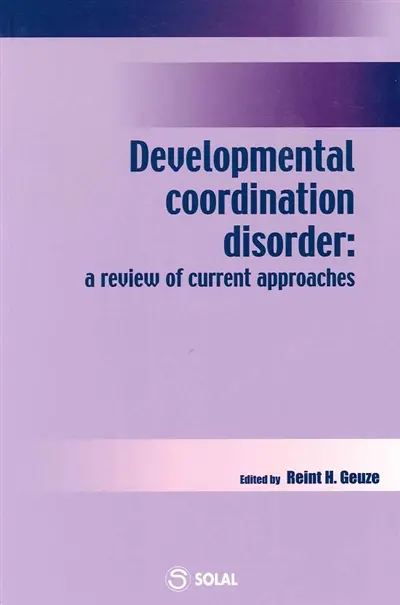
Aborde les difficultés rencontrées par l'enfant souffrant d'un TAC (trouble de l'acquisition de la coordination), les tests disponibles pour les fonctions perceptivo-motrices, les différents sous-types et la comorbidité, les déficits sous-jacents au TAC, les approches thérapeutiques et leur efficacité, et la prise en charge du TAC. ©Electre 2026
The ability to move around and act develops mostly without any need for specific training. Motor development is promoted by interactions with the environment which afford, provide and constrain certain actions, and offer models for imitative learning. Our ability to apply principles of coordination to new skills creates new possibilities. But some skills, such as writing, need specific training and instruction.
Some children, however, do not seem to develop their motor skills to an appropriate level. They have difficulty in learning motor skills and they are clumsy when using them. As a result, they lag behind in their motor development. For many children with motor problems, no specific medical (neurological) cause can be found. They are classified as children with Developmental Coordination Disorder (DCD) and are the subject of this book. Other terms that relate to DCD are clumsiness, dyspraxia, perceptual-motor and sensori-motor integration problems.
The aim of this book is to inform the interested reader - professional, researcher, student, teacher and parent alike - about our current knowledge of DCD. It reviews the problems and limitations that children with DCD meet (Geuze), the main tests available in the field of perceptual-motor function (Albaret & Castelnau), the evidence for subtypes and comorbidity (Visser), the deficits underlying DCD (Wilson & Butson), the main intervention approaches and their effectiveness (Polatajko & Cantin), and the management of DCD (Sugden). This may stimulate the use of the knowledge available and the use of appropriate instruments for diagnosis, assessment, and treatment or guidance. The ultimate goal is optimal development - not just motor development - depending on the capacities of the child with DCD : this is a task for parents, teachers and the professionals involved.
Paru le : 01/02/2007
Thématique : Psychologie de l'enfant - Généralités
Auteur(s) : Non précisé.
Éditeur(s) :
Solal
Collection(s) : Non précisé.
Contributeur(s) : Editeur scientifique (ou intellectuel) : Reint Hemmo Geuze
Série(s) : Non précisé.
ISBN : 978-2-35327-012-5
EAN13 : 9782353270125
Reliure : Broché
Pages : 222
Hauteur: 24.0 cm / Largeur 16.0 cm
Épaisseur: 1.3 cm
Poids: 407 g